
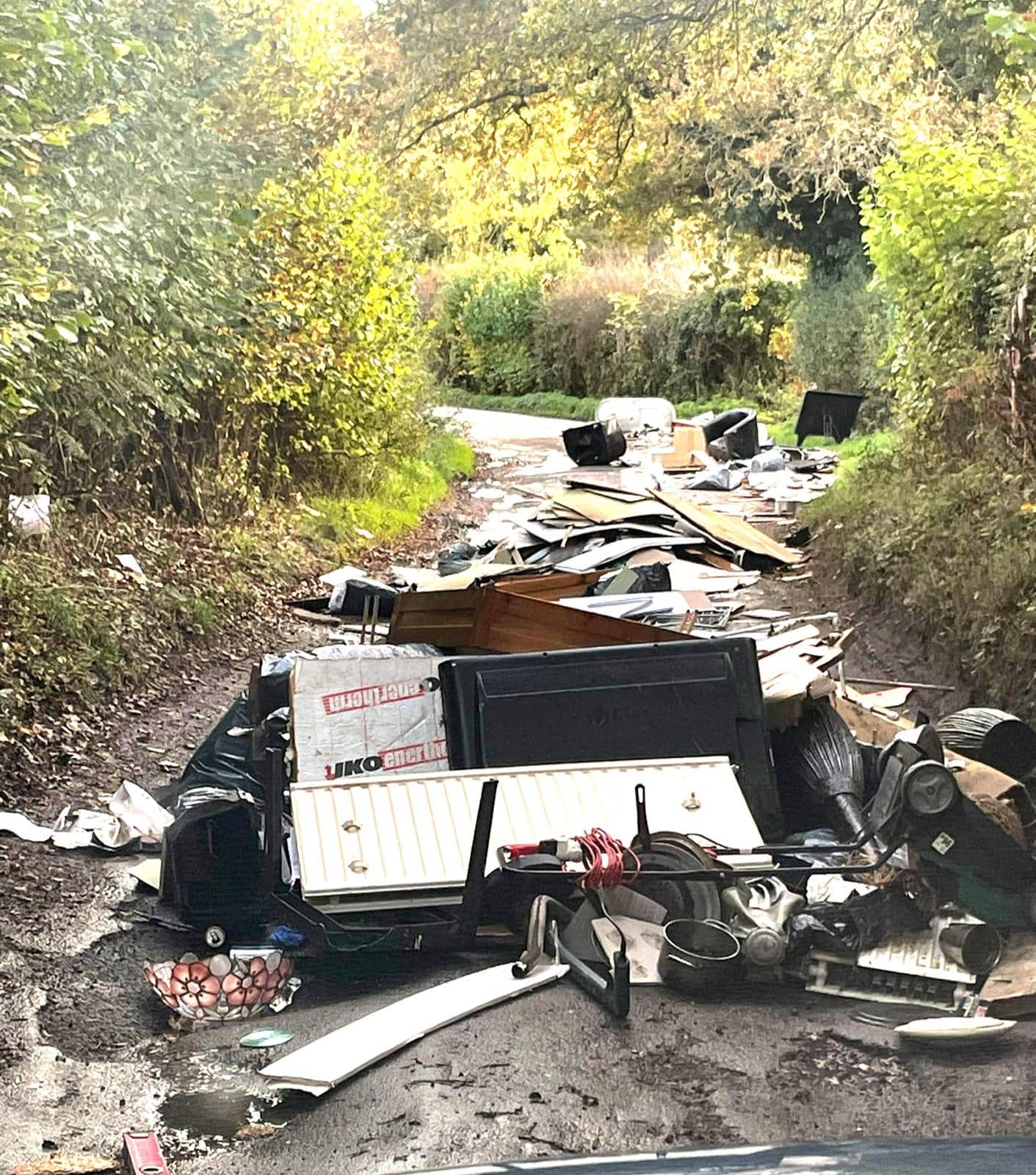
Today, the government published its Waste Crime Action Plan, the most comprehensive package of measures on waste crime in recent memory. The plan, introduced by Environment Secretary Emma Reynolds, is structured around three objectives: Prevent, Enforce, and Remediate. It follows trail announcements on 14-15 March covering driving licence penalty points for fly-tippers and expanded police-style powers for the Environment Agency.
The published plan goes substantially further than those initial headlines. It introduces major regulatory reforms, including reforms to carriers, brokers, and dealers, mandatory digital waste tracking starting October 2026, and tighter waste permit exemptions. It commits an additional £45 million in enforcement funding for the Environment Agency over three years, creates a new Operational Waste Intelligence and Analysis Unit, and proposes conditional cautions requiring fly-tippers to clean up their mess and pay back clearance costs. For the first time, the government is also committing to directly clear the worst illegal waste sites, with three locations named for immediate feasibility assessment.
Clean Up Britain has been campaigning for systemic enforcement reform, stronger penalties, and a multi-pillar approach to tackling litter and fly-tipping for years. Today’s announcement touches on much of what we have called for. But as we have always argued, the true test lies in implementation. Below is our full response.
Our Response:
Statement from Clean Up Britain on the Waste Crime Action Plan
Clean Up Britain welcomes the government’s Waste Crime Action Plan, published today. The plan’s combination of expanded enforcement powers for the Environment Agency, driving licence penalty points for fly-tippers, conditional cautions with community payback, major regulatory reforms, and £45 million in additional enforcement funding represents the most significant package of measures on waste crime in recent memory. Crucially, the inclusion of a remediation objective, with government-led clearance of the worst illegal waste sites, signals a welcome recognition that enforcement alone is not enough. These measures reflect what CLUB has been calling for: a systemic approach that matches the scale of the problem.
However, we must be clear: powers on paper mean nothing if they are not used in practice. The UK already has a raft of enforcement tools available to councils and agencies that are chronically underused. CLUB’s own research revealed a 58:1 ratio of parking fines to littering fines across England, not because littering is rare, but because enforcement is deprioritised. The record 1.26 million fly-tipping incidents last year did not happen because the law was too weak. They happened because enforcement was too scarce. We recognise, too, that even with significantly increased resources, tracing and identifying the culprits of fly-tipping is inherently difficult, which makes it all the more important that enforcement is not treated in isolation.
New powers for the Environment Agency are only as good as the resources and political will behind them. The Police and Criminal Evidence Act 1984 (PACE) and the Proceeds of Crime Act 2002 (POCA) powers will not arrest a single waste criminal if the EA remains under-resourced relative to the scale of the problem. Penalty points will not deter a single fly-tipper if councils continue to lack the capacity or inclination to investigate and prosecute.
The £45 million funding commitment is a meaningful step toward matching resources to ambition. However, the true test will be whether the Action Plan’s measures are implemented with the urgency and consistency they require. We urge the government to ensure that the mechanisms to guarantee these powers are actually used, including ring-fenced enforcement funding, mandatory reporting on prosecution rates, and clear accountability for councils and agencies that fail to act, are followed through without delay. In addition to improved detection, the government should go further still on the severity of penalties. Fines for littering and fly-tipping must be increased significantly: current levels remain too low to act as a genuine deterrent, particularly for repeat offenders and those operating commercially. The maximum on-the-spot fine for littering has not kept pace with the scale of the problem, and fixed penalty notices for fly-tipping are often treated as a manageable cost of doing business. Beyond fines, sentences of up to ten years for the most serious waste crime offences would send an unmistakable signal that this is not a minor regulatory matter but a serious criminal enterprise. The proposed five-year maximum is a step forward, but it does not yet match the scale of harm or profit involved in organised waste criminality.
Crucially, enforcement alone will never solve this crisis. This has always been central to CLUB’s message: our five-pillar strategy exists precisely because no single measure, however strong, can succeed in isolation. Enforcement must be coupled with a sustained national communication campaign to shift public attitudes and norms around waste disposal, making clear that fly-tipping is not a victimless act but a crime with real consequences for communities, wildlife, and the environment. It is notable that the Action Plan contains no commitment to such a campaign, and this is a significant gap. Alongside this, sustained investment in waste infrastructure is essential: accessible and affordable disposal options, better-maintained civic amenity sites, and expanded collection services are needed to remove the excuses that drive illegal dumping in the first place. Education, legislation, and corporate responsibility must all work in concert with enforcement. Without action across all of these fronts, even the most robust enforcement powers will be fighting a losing battle.
We welcome the Action Plan’s prevention measures, particularly the carriers, brokers and dealers reforms and digital waste tracking, which address long-standing regulatory weaknesses that have allowed criminals to operate with impunity. The commitment to clear the most egregious illegal waste sites, the proposed insurance model for landowners, and the Landfill Tax rebate scheme are important steps. We also welcome the introduction of conditional cautions with community payback, requiring fly-tippers to clean up their mess, which is a principle CLUB has long advocated for, and it provides a visible, practical consequence that strengthens the deterrent effect.
CLUB stands ready to work with the government, the Environment Agency, local authorities, and our partners to ensure these measures translate into real change on the ground. The British public deserves nothing less.
Today’s Waste Crime Action Plan is a step in the right direction. We will be watching closely to ensure these commitments are delivered, and we will continue to advocate for the broader changes still needed, including a national communication campaign, stronger penalties for the most serious offenders, and sustained investment in the waste infrastructure that communities depend on.


 Media and donor enquiries: