
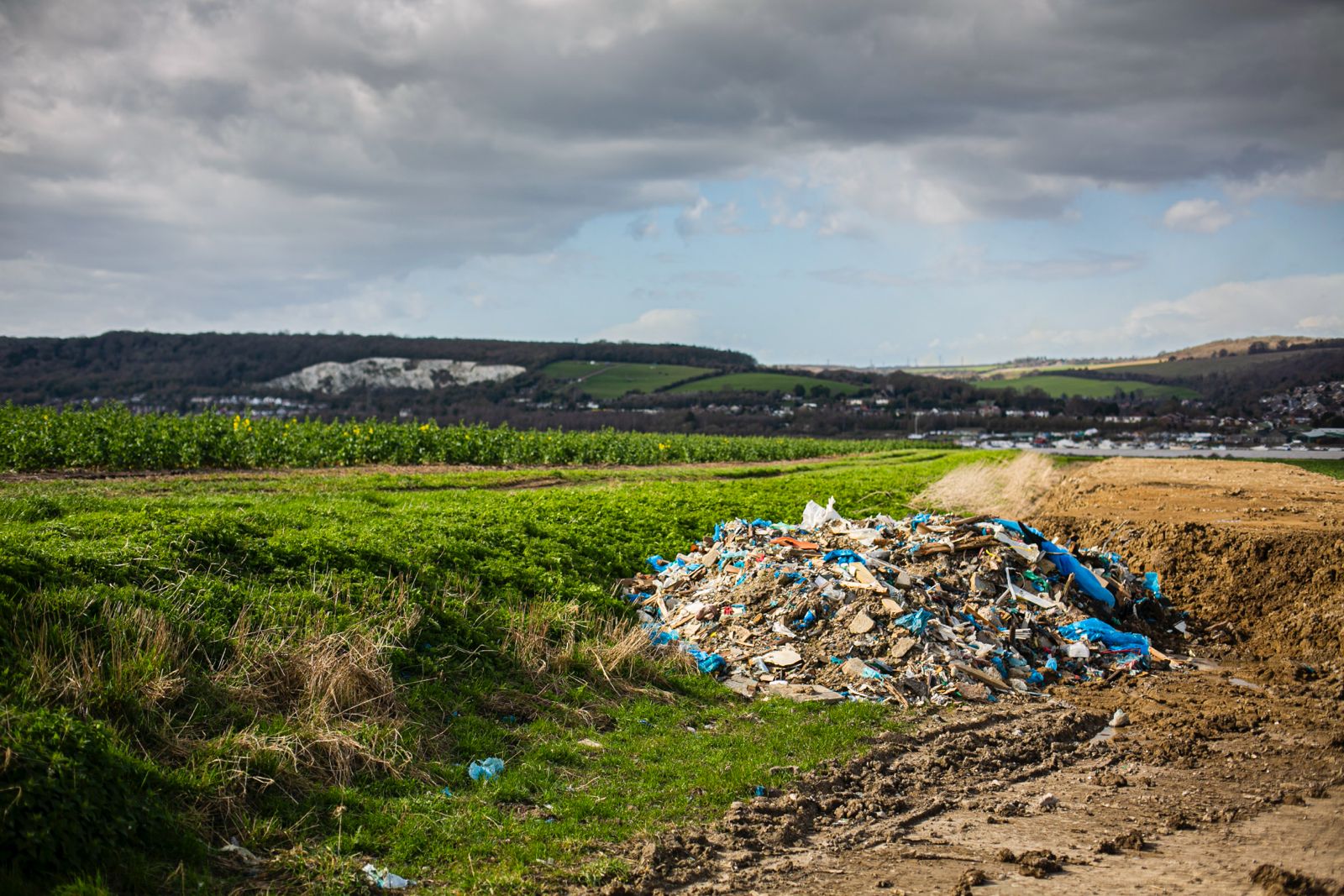
OVER A MILLION FLY-TIPS A YEAR, AND STILL ALMOST NOBODY IS PROSECUTED
New Government figures confirm England’s fly-tipping crisis is deepening, and Clean Up Britain calls for an immediate end to years of weak enforcement and political half-measures
Today, the Department for Environment, Food & Rural Affairs (DEFRA) released its annual fly-tipping statistics for England for 2024/25. The figures confirm that fly-tipping remains one of the most visible, costly and persistent environmental crimes in the country, with 1.26 million incidents recorded, up 9% on the previous year, costing councils an estimated £19.3 million to deal with the largest incidents alone.
The data also reveals that, for every fly-tip reported, the chances of meaningful enforcement action remain vanishingly small. Just 69,000 Fixed Penalty Notices were issued nationally, and only 1,377 prosecutions were brought, resulting in an average court fine of just £539. As a proportion of total incidents, fewer than 0.2% resulted in any court action.
Clean Up Britain’s Response
Commenting on the figures, John Read, founder of Clean Up Britain, said:
“Today’s fly-tipping stats are further evidence of the national epidemic we’re facing in England, and indeed the whole of the UK. These figures don’t even include the number of fly-tips on private land suffered by farmers and other landowners. There needs to be significantly increased financial, operational and judicial deterrents to fly-tipping. At the moment, there is little chance of being caught, and the sentences, if and when caught, are derisory. To be effective, we have to create real jeopardy and fear in the minds of fly-tippers. The cost – and risk – of ‘doing business’ has to become too exorbitant for them. Clean Up Britain has outlined a set of proposals below that lay out specific measures that the government needs to seriously reflect upon, and hopefully introduce. We cannot carry on tinkering at the edges; that patently hasn’t worked. We need to start getting very tough on fly-tippers before our country is even more buried under a tsunami of waste.”
John Read continued:
“The Government must recognise that tinkering around the edges, small adjustments to fines here, a pilot scheme there, will not solve this. We need systemic change: higher penalties that genuinely hurt, an independent enforcement body with real resources and powers, and a legal framework that removes the financial barriers to prosecution that councils currently face.”
The Scale of the Problem
Today’s Defra release shows:
- 1.26 million fly-tipping incidents in England in 2024/25 – up 9% year-on-year
- Over 62% of incidents involving household waste (777,000 incidents, up 13%)
- 52,000 large-scale incidents (tipper lorry load or larger), up 11% – costing councils £19.3 million to clear
- Only 69,000 Fixed Penalty Notices issued nationally (up 9%, but just 1 FPN per 18 fly-tips)
- Only 1,377 court prosecutions – an average of fewer than 5 per local authority in England
- Average court fine of £539 – compared to a maximum permitted Fixed Penalty of £1,000
Clean Up Britain’s Seven-Point Manifesto for Change:
In response to the ongoing crisis, Clean Up Britain is calling on the Government to urgently adopt the following concrete reforms:
- Increased fine. Any private citizen caught fly-tipping should automatically have their driving licence endorsed with six penalty points and be fined £5,000. If they cannot pay, they would be required to undertake 200 hours of supervised litter-picking.
- Clear fines for fly-tipping. Unequivocal guidance to the courts from the government that any fly-tipper acting in connection with their ‘business’ should face a minimum mandatory fine of £20,000. The top-level fine is already unlimited. This category of criminal would also be automatically banned from driving for 12 months.
- Mandatory hidden surveillance cameras. Councils should be required to install a minimum number of hidden surveillance cameras in their area. The precise number would be calculated on the basis of the previous year’s incidence of fly-tipping in their area.
- Sentencing guidelines rewritten. The Sentencing Council guidelines – which severely constrain Magistrates’ Courts – need to be rewritten and sentences significantly increased. There should also be increased use of suspended prison sentences.
- Ban on cash payments for waste collection. Payment for waste collection services should be made only by digital means, to enable a digital trail back to any offenders. All cash payments should be banned. According to many councils, this would be a game-changer.
- Court-imposed fines retained by councils. All revenue from court-imposed fines should be kept by councils. At present, 100% of court-imposed fines go to the Treasury. This is illogical and unfair: councils bear the costs of investigation and prosecution, yet receive nothing in return.
- Establishment of a National Fly-Tipping Prosecution Fund. The Government should establish a centrally administered £10m Fly-Tipping Prosecution Fund to finance investigations and prosecutions where, as determined by an independently appointed lawyer, there is a reasonably good chance of conviction. This would remove some of the financial jeopardy and risk that currently deters councils from bringing prosecutions.


 Media and donor enquiries: