
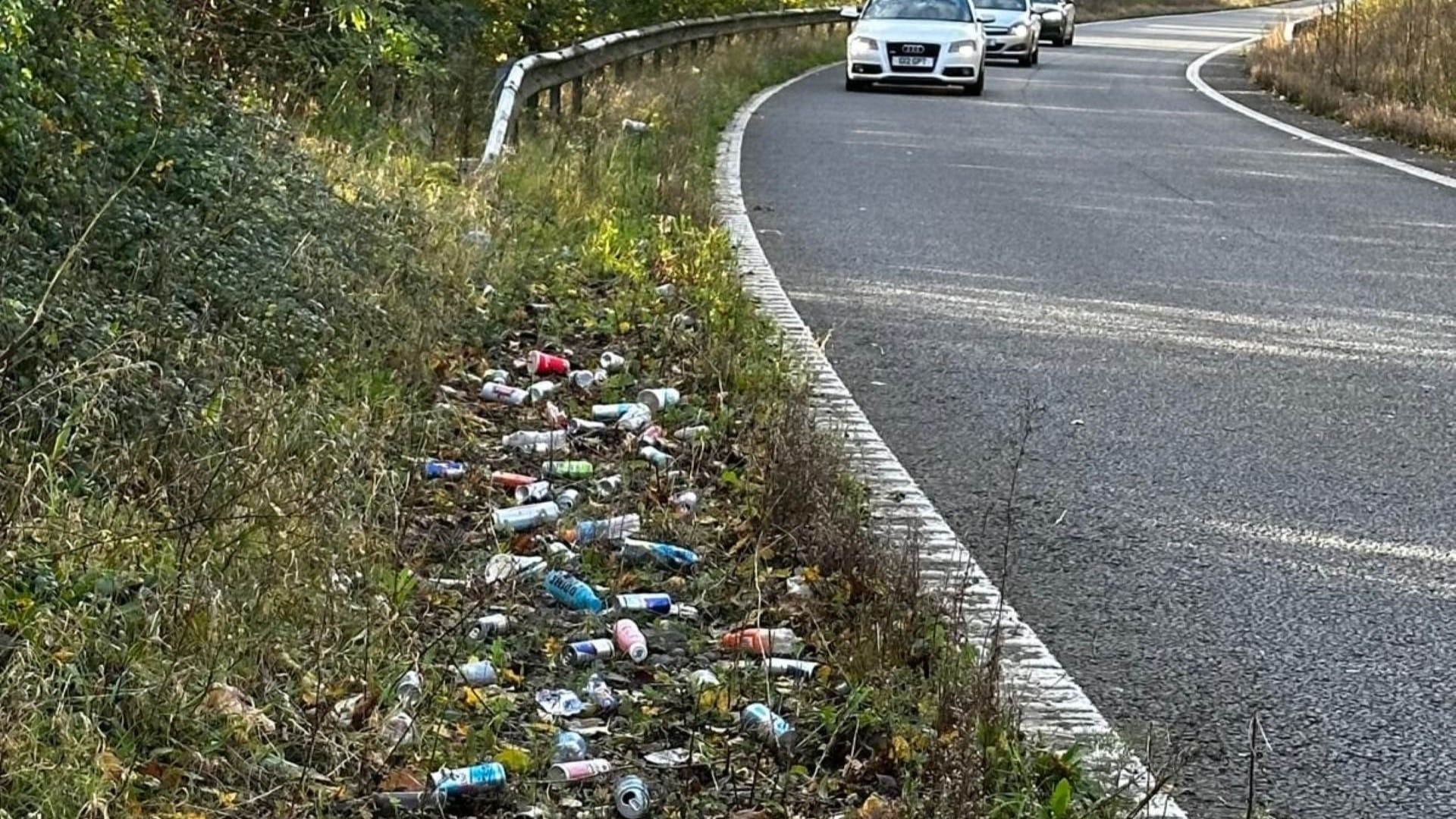
Red Bull’s ‘on-the-go’ culture fuels disposable behaviour among time-pressed workers; solving this requires immediate change, with brands and consumers taking responsibility, legislative reform, and ending marketing that normalises littering.
Beverage containers account for approximately 56% of litter in the UK1. And 92% of people say drinks packaging is the worst offender2. Within that picture, Red Bull stands out: it accounts for 2.64% of branded litter nationally, but its share increases in specific contexts and countries. Look closely and you see more than individual choices; you see mobile consumption, brand identity and throw-away behaviour intersecting.
Energy drinks now accounts for 19% of all soft drink value3, with Red Bull holding roughly 36.8% of the UK energy-drink can market4. The original 250ml can of Red Bull continues to sell more units than any other single-serve soft drink3. On the ground, that translates to an estimated 25 million Red Bull cans littered each year, 68,500 cans a day. International patterns help explain this. In Austria, Red Bull accounts for 23% of the littered beverage containers; in the Netherlands, it’s 20.9%, making it the top brand in both countries. The UK shows the same patterns in specific settings, which suggests this isn’t only about market share.
The delivery sector is the most transparent case. Between October and December 2024, drivers moved 1.29 billion parcels5. The ONS puts UK delivery drivers at about 246,000, though the actual number is likely higher once you include part-time and gig economy work. Around 78.8% of drivers report consuming energy drinks while driving6, and more than 1 in 10 lorry drivers consume five or more caffeinated beverages per day7. That aligns with the reality of the job: long shifts and high drop counts. Amazon routes can take 11 hours or longer and involve over 200 parcels each8. Energy drinks are baked into that work pattern: quick, portable, and available everywhere.
Those conditions shape disposal. Surveys show 22% of motorists litter out of habit, and 15% say they don’t have time9. For time-pressed delivery workers with few breaks, the barrier to proper disposal is obvious. But why do Red Bull cans show up so heavily compared with other drinks used in the same way? Part of the answer is cultural.
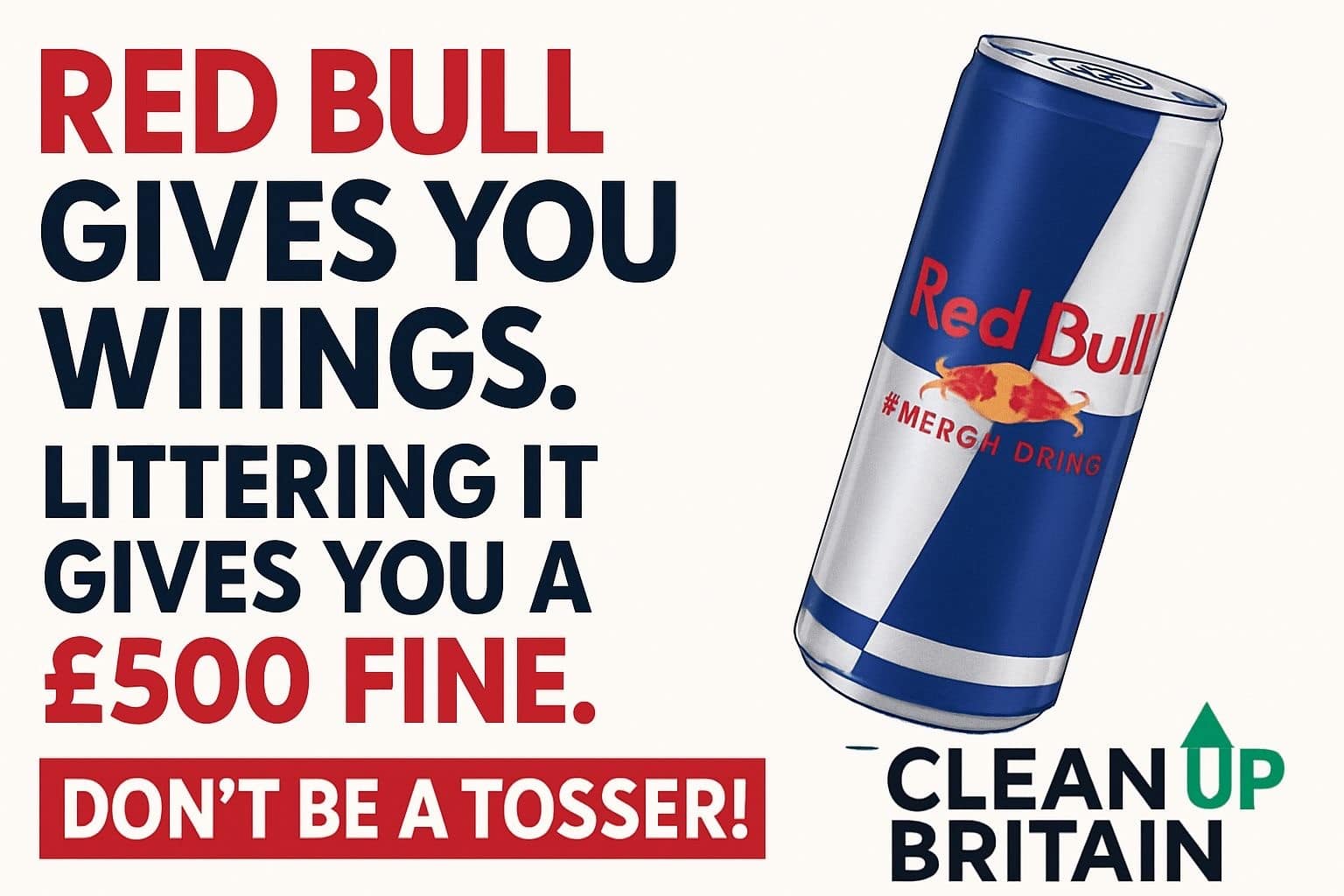
Red Bull’s brand is about performance and endurance: it “gives you wings” and is a promise of longer, harder, faster. That pitch resonates in logistics and transport. The extreme sports and motorsport halo builds an identity around motion and effort. In practice, this can normalise on-the-go consumption, where discarding becomes part of the work rhythm, rather than a separate task. The blue-and-silver can is also highly visible on verges, which reinforces public perception.
Austria and the Netherlands exhibit the same pattern, despite Red Bull having smaller market shares in these countries than in the UK. That suggests brand-specific consumption cultures influence litter outcomes independently of simple penetration. Where the brand is tightly coupled to mobile work, its cans are more likely to end up roadside. The image matters just as much as individual choice.
This is where labour practices, throw-away culture, and a lack of infrastructure intersect. Parcel volumes keep rising. Without intervention, energy-drink use and the associated litter will increase too. The UK’s carbonated drinks packaging consists of 33.5% metal cans10, resulting in a substantial potential litter stream. Energy-drink cans cluster along transportation corridors, which suggests that specific users are disproportionately driving the problem. We ask workers to stay alert for long hours, then provide them with safe and convenient points to dispose of waste. Infrastructure on major routes isn’t keeping pace, and UK producer-responsibility tools still lag behind some European approaches. For example, deposit return schemes create more substantial incentives to return containers, but are still years away in the UK.
International comparisons are helpful, but they also show that there’s no single fix. Where Red Bull tops litter rankings, the issue persists unless policy, infrastructure, and brand action move in tandem. Energy-drink litter follows a different pattern than other beverages because the use case is distinct: it’s about marketing, work culture, and context, rather than just personal morality.
In short, the Red Bull can has become a roadside emblem not simply because of market share or “bad apples,” but because brand culture, work routines and weak infrastructure line up to produce predictable waste. Even on conservative estimates, 25 million Red Bull cans are littered annually in the United Kingdom. Any serious response has to tackle those structural and cultural drivers, including how people work, where and when they can dispose, and how brands participate, without relying solely on individual behaviour change.


 Media and donor enquiries: